
 Add Preferred Source
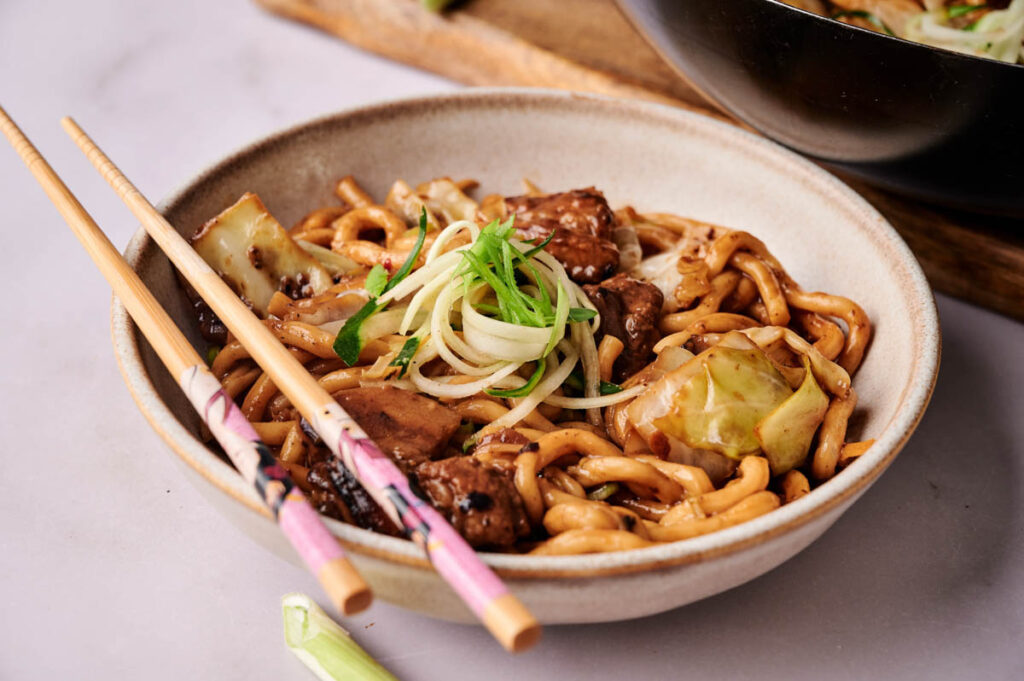
I can’t get over how good Black Bean Noodles are every time I make them. That glossy black sauce perfectly coats each strand with deep, savory flavor that’s a little sweet and incredibly rich. The tender pork belly softens into the sauce, adding a buttery, salty bite. You’ll love how filling and flavorful it is without being heavy.
This post contains affiliate links. As an Amazon Affiliate, if you purchase through those links, I earn a commission. Thank you!
I make it for busy weeknights and casual dinners with friends when I want a fun way to switch up regular noodle nights. It’s filling, budget-friendly, and tastes best when fresh, though it reheats gently with a splash of water to loosen the sauce. Store the sauce and noodles separately in airtight containers in the fridge for 3 to 4 days or freeze for up to 2 to 3 months.
Ingredients You’ll Need
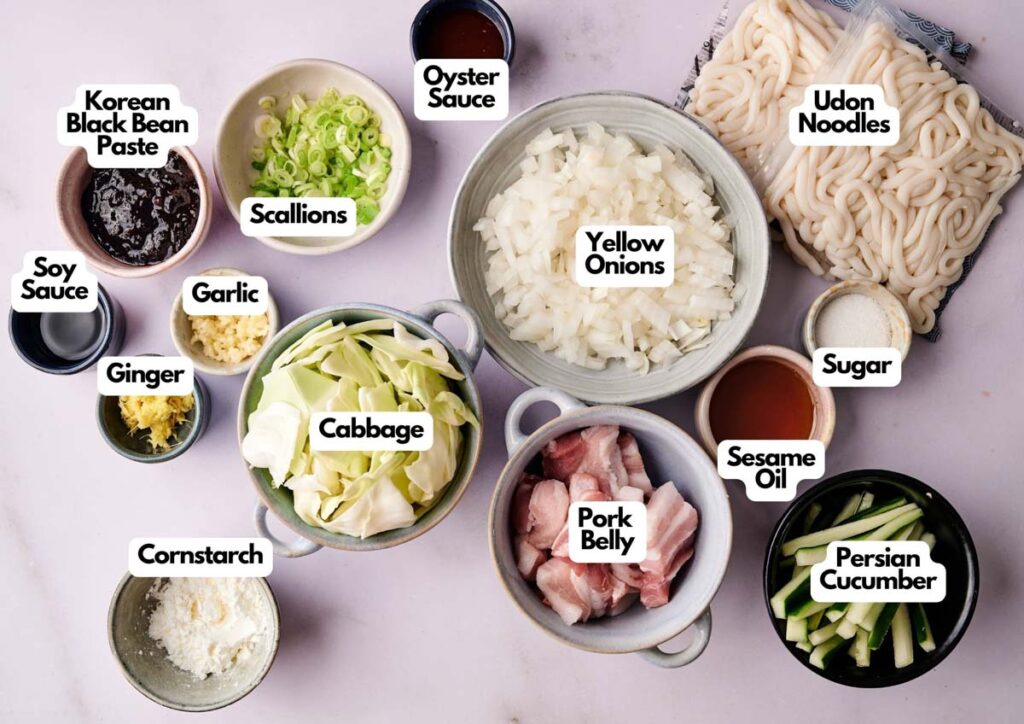
You’ll need all the ingredients shown in the photograph below.
How to Make Black Bean Noodles with Step-By-Step Instructions
Scroll down for the full recipe card containing a full printable recipe and measurements in both US customary and metric units.
I’ll walk you through making one of Korea’s most beloved comfort foods so you can enjoy a perfect bowl right at home.
Cook the Vegetables
In a large wok or pot, heat the sesame oil over medium heat. Add the chopped cabbage and diced onions. For extra moisture, gentle sweetness, color, and a little extra protein, you can also add carrots or zucchini, along with sliced mushrooms, peas, and cubed tofu if you like. The mushrooms deepen the savory flavor, the peas add little pops of sweetness, and the tofu absorbs the sauce.
Cook for 4–6 minutes, stirring occasionally, until the onions are translucent and the cabbage edges are lightly brown and caramelized, adding a subtle sweetness to the sauce later.
I reach for my carbon steel wok pan because it heats evenly and gives the cabbage and onions the quick, perfect sauté without any fuss.
Add the Pork and Aromatics
Toss in the pork belly chunks, or swap in beef or seafood if you prefer a leaner bite or a lighter, brinier flavor, along with the minced garlic and grated ginger. Cook for 3–5 minutes, stirring, until the pork heats evenly, loses its pink color, and turns lightly golden brown.
As it renders, the fat releases and adds even more richness to the dish. A good garlic press like this one makes mincing garlic quick and easy when you don’t feel like chopping.
Cook the Black Bean Paste
Push everything to the sides of your pan to create a space in the center. Add the Korean black bean paste directly into that well and let it cook in the hot oil for about 1 minute without stirring. This step caramelizes the paste and brings out its deeper, sweeter notes. Then stir everything together until the vegetables and pork are completely coated in that dark sauce.
Build the Sauce
Add the sugar, oyster sauce, and soy sauce to the pan. Stir everything well and let it cook for 2–3 minutes until the sauce becomes glossy and thick. The sugar helps balance the earthy, salty flavors of the black bean paste.
Thicken With Cornstarch Slurry
In a small bowl, mix the cornstarch with ¼ cup of water until smooth. Pour this mixture slowly into the pan while stirring constantly with a spoon. I love using this wooden spoon here because it lets me stir the slurry in smoothly and keep the sauce silky without scratching my pan.
Let it simmer for 2–3 minutes until the sauce thickens to a gravy-like consistency that’ll cling to your noodles, then remove from heat once you’ve got the glossy, thick texture.
Cook and Toss the Noodles
While the sauce is thickening, cook the fresh udon noodles according to the package instructions in a separate pot. A good nonstick stockpot like this one makes boiling udon so effortless that they cook evenly and never stick to the bottom. If you prefer a slightly firmer texture, wheat noodles work just as well and cook up beautifully.
Drain them and rinse briefly under cold water to stop the cooking and remove excess starch. A colander like this is a lifesaver here because it lets me drain the hot udon in seconds, keeping the noodles bouncy and ready for sauce.
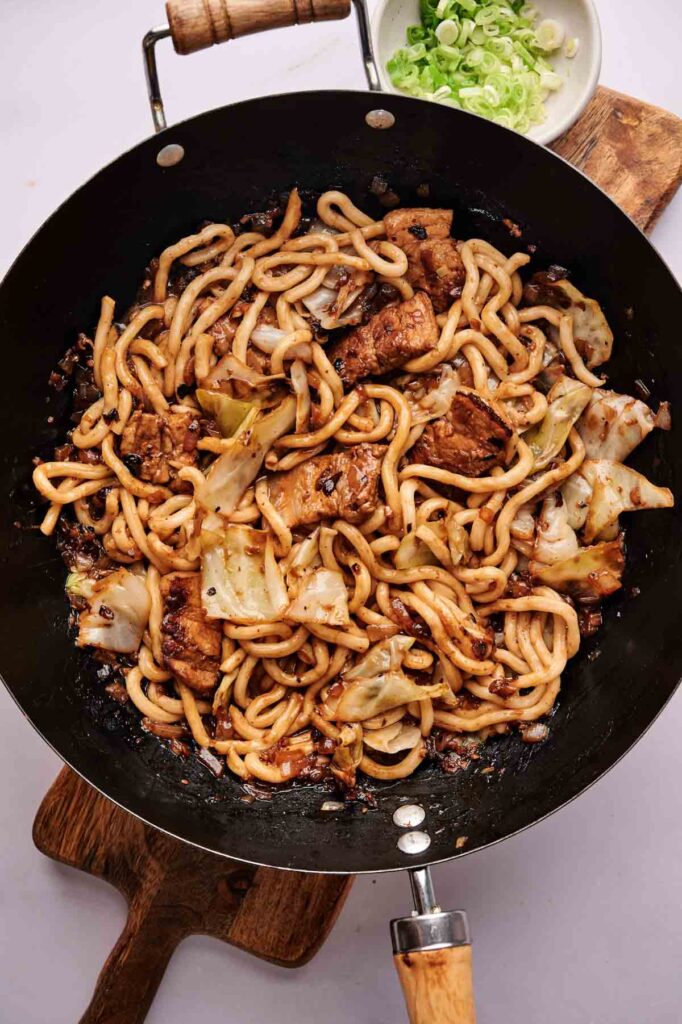
Add the noodles directly to the pan with the sauce, then use these tongs or chopsticks to fold and toss until every strand is coated. The noodles will absorb some of the sauce and take on a deep brown color.
Garnish and Serve
Transfer the noodles to a pasta bowl like this one and top with julienned Persian cucumber cut into thin matchsticks for a crisp, cooling contrast, and sliced scallions to bring a sharp, fresh bite. For a fresh pop of heat, you can add a thinly sliced Korean chili pepper as well. Enjoy!
Black Bean Noodles
Ingredients
- 2 cups green cabbage chopped into 1-inch pieces
- 2 cups yellow onions diced
- ¼ cup sesame oil
- 8 ounces boneless skinless pork belly, cut into 1-inch chunks
- 1 tablespoon garlic minced
- 1 tablespoon fresh ginger grated
- ¼ cup Korean black bean paste chunjang or jjajang
- 1 tablespoon sugar
- 1 tablespoon oyster sauce
- 1 tablespoon soy sauce
- ½ cup water divided
- 2 tablespoons cornstarch
- 1 cup Persian cucumber julienned (for garnish)
- 1 cup scallions sliced
- 7 ounces fresh udon noodles or noodles of choice
Instructions
- In a large wok or pot, heat the sesame oil over medium heat. Add the cabbage and onions and cook for 4–6 minutes, stirring occasionally, until onions are translucent and cabbage is lightly browned.2 cups green cabbage, ¼ cup sesame oil, 2 cups yellow onions
- Add the pork belly, garlic, and ginger. Cook for 3–5 minutes, stirring, until the pork is no longer pink.8 ounces boneless, 1 tablespoon garlic, 1 tablespoon fresh ginger
- Make a well in the center of the pan. Add the black bean paste and cook it in the oil for 1 minute. Stir everything together until well coated.¼ cup Korean black bean paste
- Add sugar, oyster sauce, and soy sauce. Stir well to combine and let it cook for 2–3 more minutes until glossy.1 tablespoon sugar, 1 tablespoon oyster sauce, 1 tablespoon soy sauce
- In a small bowl, mix ¼ cup water with the cornstarch. Slowly pour this into the pan, stirring constantly. Let it simmer for 2–3 minutes until thickened like gravy. Remove from heat.½ cup water, 2 tablespoons cornstarch
- Cook the noodles according to the package instructions. Drain, rinse briefly under cold water, and fold it into the pan. Toss until the noodles are coated with the sauce.7 ounces fresh udon noodles
- Garnish with julienned cucumber and sliced scallions.1 cup Persian cucumber, 1 cup scallions
Video
Notes
- Cut pork into even chunks: Keeping the pork belly pieces about 1 inch ensures they cook through at the same time, without some pieces being raw while others are overcooked.
- Bloom the paste first: Cooking the chunjang in hot oil for a full minute before mixing caramelizes the fermented beans and removes any raw, bitter taste while bringing out the sweet, earthy flavor.
- Make the cornstarch slurry smooth: Mix your cornstarch completely with cold water before adding it to the hot pan; you’ll end up with lumpy sauce that won’t thicken evenly.
- Don’t skip rinsing the noodles: A quick rinse under cold water after draining stops them from overcooking and keeps them from clumping together in a sticky mass.
- Serve immediately for best texture: The noodles absorb the sauce as they sit, so these are best eaten right away when the sauce is still glossy and the noodles are slippery.
- Flash freeze the sauce: Pour cooled sauce into a freezer bag laid flat, freeze until solid, then stand it upright to save space and make it easy to break off portions when you only want to reheat a single serving.
Nutrition
How to Store Leftovers
To achieve the ideal texture, store the cooked udon noodles and black bean sauce in separate airtight containers. In the fridge, both keep well for up to 3–4 days, and when frozen separately, they’ll maintain good quality for 2–3 months.
If the noodles are already mixed with the sauce, transfer leftovers to an airtight container and refrigerate promptly. For safety and quality, enjoy within 3–4 days, as the noodles will continue to soften over time.
When freezing, portion the noodles and sauce separately if possible to make reheating easier and prevent mushy noodles. Thaw overnight in the fridge and reheat gently, adding a splash of water if needed to loosen the sauce.
What to Serve With Black Bean Noodles
These noodles are pretty filling on their own, but I usually serve them with Korean pickled radish (danmuji) on the side because the tangy crunch balances the rich sauce perfectly. A simple cucumber salad with rice vinegar and sesame seeds also works well, or you can go with kimchi if you prefer some heat. Steamed rice (jjajangbap) is another perfect option if you’d like to enjoy the black bean sauce both ways, letting it soak in for an extra comforting bite.
For a larger meal, consider adding Korean fried chicken or vegetable mandu (dumplings) as appetizers. A light, clear soup, such as seaweed soup (miyeok guk), is traditionally served alongside jjajangmyeon in Korean restaurants.
More Easy Recipes for You to Try at Home
If you love these noodles, you’ll want to try my other easy Asian-inspired recipes.